

Mahama sets ambitious manufacturing target: 15% of GDP and 500,000 industrial jobs by 2030
Business
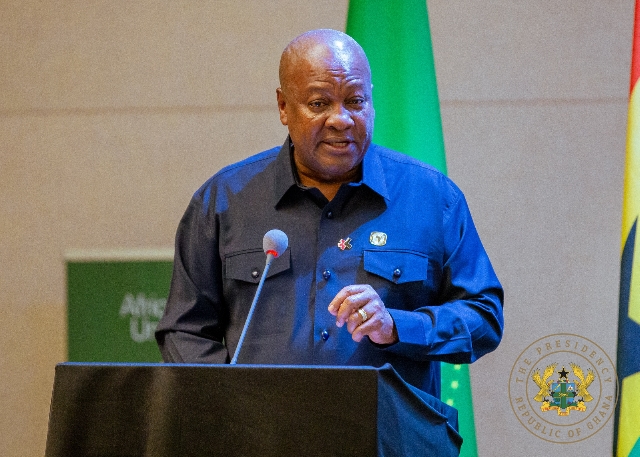 John Dramani Mahama, President of Ghana
President John Dramani Mahama has unveiled plans to significantly boost Ghana’s manufacturing sector, setting a target for it to contribute at least 15 percent to the country’s Gross Domestic Product (GDP) by 2030.
The initiative also aims to create 500,000 new industrial jobs.
Addressing business leaders in Accra, the president highlighted the long-term stagnation of the sector.
“For over five decades, Ghana’s manufacturing sector has contributed around 10% to GDP. Meanwhile, emerging Asian economies, starting from a similar basis, have achieved manufacturing of 20% to 30% of GDP,” he said, stressing the need for urgent reforms to remain competitive.
To achieve the target, President Mahama outlined a series of structural measures aimed at addressing key obstacles.
Citing a report by the Ghana Chamber of Mines, he noted that Ghana is losing investment competitiveness to neighbouring countries, including Benin, Côte d’Ivoire, and Nigeria.
High electricity tariffs, unstable power supply, machinery import duties, and corporate taxation were identified as major barriers discouraging industrial growth.
“No industrial nation thrives under structurally high costs of power,” he said, announcing plans to restructure energy sector debts, expand renewable energy generation, introduce differentiated off-peak tariffs for industry, and improve transmission efficiency.
President Mahama also pledged to expand access to industrial financing through partnerships with the Bank of Ghana (BoG) and development finance institutions.
“These reforms are not incremental adjustments, they are structural reforms necessary to change our trajectory,” he said.
He emphasised that achieving the 15 percent manufacturing target will position Ghana as a competitive industrial hub in West Africa, driving economic growth, job creation, and investment.
The announcement signals a renewed focus on structural reforms and long-term planning as the government seeks to transform Ghana’s industrial landscape.
Source: classfmonline.com


Trending News

Former student speaks about misconducts at Royal Nursing Training College
12:51
Minority raises alarm over delayed rent allowances to Ghana Prisons Service officers
19:10
33-year-old woman remanded over Mamprobi Polyclinic baby theft
22:24
Works and Housing Minister assures public of action on water crisis
02:24
CDAG demands NPA revoke licenses of OMCs selling contaminated fuel
12:35
GH¢23bn cocoa road contracts deepened COCOBOD’s crisis -Roads Minister
17:56
NSA Board Chairman engages TEIN leadership at UNIMAC
14:11
GWL needs over ₵3.5bn to replace ageing pipelines
16:06
OSP probes alleged diversion of palm oil consignment meant for Burkina Faso
13:32
IGP Yohonu confirms arrests over killing of father-in-law of Sammy Gyamfi
21:58
