

'Reserved in the womb' and sold for £500: Police bust baby trafficking ring
Odd News
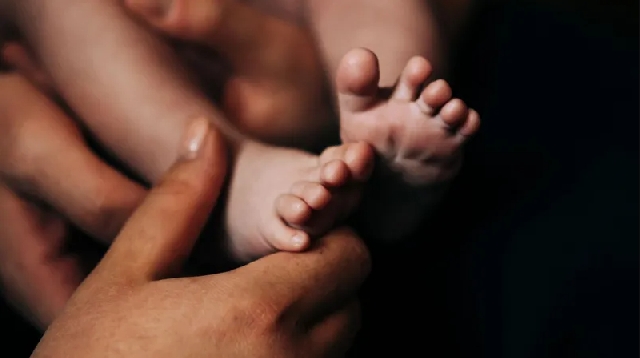 Getty Images (Pic):
Indonesian police have uncovered an international baby trafficking syndicate which has allegedly sold at least 25 infants to buyers in Singapore since 2023.
Authorities made 13 arrests related to the syndicate in the Indonesian cities of Pontianak and Tangerang this week, and rescued six babies who were about to be trafficked – all of whom are around a year old.
"The babies were first housed in Pontianak and had their immigration documents arranged before being sent to Singapore," West Java Police's director of general criminal investigation, Surawan, told BBC News Indonesia.
BBC News has contacted Singapore Police and Singapore's Ministry of Home Affairs for comment, but received no response.
The syndicate's alleged modus operandi was to target parents or expectant mothers who allegedly did not want to raise their child - in some cases initiating contact via Facebook before pivoting to more private channels such as WhatsApp, according to police.
"Some babies were even reserved while still in the womb," Surawan said. "Once born, the delivery costs were covered, then compensation money was given, and the baby was taken."
Police said members of the group included recruiters who tracked down babies to be trafficked; caretakers and people who housed them; and others who prepared fraudulent civil documents such as family cards and passports, he explained.
After being taken from their mothers, the babies were given to caretakers for two to three months before being sent to Jakarta and then Pontianak, where their birth certificates, passports, and documents were prepared, police said.
The babies were sold for between 11 million Indonesian rupiah ($673; £502) and 16 million Indonesian rupiahs each, they added.
According to some of those arrested, the syndicate sold at least 12 male and 13 female babies domestically and abroad - most of them having come from various districts and cities in the Indonesian province of West Java.
Indonesian police on Thursday said that their "immediate task" was to find the adopters in Singapore.
"We will cross-check the data with the babies who departed, so we know exactly who departed, who accompanied them, when they departed, and who the adopters there are," Surawan told reporters.
Most of the information gathered by police indicated that the babies had changed nationality, he added, noting that authorities were still looking for their passports.
Surawan earlier told BBC Indonesia that the babies were obtained through agreements between the traffickers and the parents, and that none so far had been taken by kidnapping. Parents who reported their child as kidnapped did so because the broker had failed to pay them, he said.
It is suspected that at least some parents may have agreed to sell their children due to financial hardship. They too could be charged with a criminal offence, Surawan said.
"If it is proven there was an agreement between the parents and the perpetrators, they can be charged with child protection crimes and human trafficking offenses," he explained.
Police in Indonesia have requested assistance from Interpol and Singaporean police to arrest syndicate members who are still abroad, as well as buyers.
"We will list the perpetrators as wanted persons," Surawan explained. "In addition, we will issue a red notice or request law enforcement in those countries to arrest them."
Child trafficking syndicates typically target women in desperate situations, according to Ai Rahmayanti, commissioner of the Indonesian Child Protection Commission (KPAI).
"For example, they became pregnant due to sexual violence, abandonment by the husband, or unwanted pregnancies from casual relationships," she told BBC News Indonesia.
Abortion is illegal in Indonesia except under certain conditions, such as medical emergencies and pregnancies resulting from rape.
Ai Rahmayanti said baby or child trafficking syndicates often pose as maternity clinics, orphanages or social shelters that appear to care for vulnerable women and children.
"These clinics or shelters use language that sounds compassionate at first, such as 'you can give birth and take your baby home'. But in reality, they offer money and illegally transfer custody of the baby," she explains.
While there is no official data on the numbers of babies being sold in Indonesia, KPAI's own data on human trafficking crimes indicates that the trend is persistent and growing.
While in 2020 KPAI recorded 11 cases of children as victims of illegal adoption, in 2023 it recorded 59 cases related to child abduction and trafficking under the guise of illegal adoption in 2023.
One of the most recent cases that KPAI advocated occurred in 2024, when babies were found in the process of being sold in locations such as Depok, West Java and Bali.
The babies, she said, were sold at varying prices.
"In Java, [the price is] between Rp11 million and Rp15 million, while in Bali it can reach Rp20 million to Rp26 million," she explained. "The price is also based on several indicators, one of which is the baby's physical appearance."
Source: bbc.com


Trending News

A/R: Police arrest 186 suspects in organised crime crackdown
22:43
GES to establish committee to regulate school celebrations nationwide
10:12
Ashesi University announces African popular culture annual conference honouring Daddy Lumba
00:24
Minority suggests redirecting some 24-Hour Market funds to Agenda 111 Hospitals
00:43
Minority backs Presbyterian Church’s anti-galamsey campaign, calls for stronger institutions
00:35
Afigya Kwabre South DCE begins community tour to account for development projects
22:37
6 dead, 34 rescued in multiple road crashes across Volta Region
12:11
Flooding in Wassa Amenfi West leaves over 24 buildings collapsed, NADMO confirms
23:58
NDC, Rawlings Foundation to mark Rawlings’ 79th birthday with commemorative events
00:36
Ashanti NSA director urges service personnel to build networks for employment opportunities
00:19
