
Training without jobs only breeds frustration — Oppong Nkrumah calls for youth employment overhaul
News
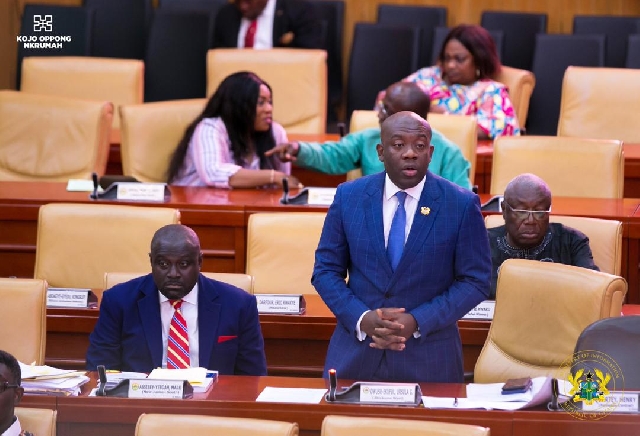 Member of Parliament for Ofoase-Ayirebi Kojo Oppong Nkrumah
Member of Parliament for Ofoase-Ayirebi Kojo Oppong Nkrumah has urged a comprehensive overhaul of Ghana’s approach to tackling youth unemployment, cautioning that training young people without creating pathways to actual jobs risks deepening frustration among the country’s youth.
Speaking during parliamentary deliberations on unemployment, the Ofoase-Ayirebi legislator presented a five-point framework designed to enhance the impact of employment interventions and confront what he described as a growing jobs crisis.
Central to his proposals is the introduction of transparent performance tracking for employment programmes. He argued that publishing regular scorecards on job creation initiatives would provide a clear basis for evaluating their effectiveness and ensuring accountability.
Mr. Oppong Nkrumah also stressed the need to separate skills acquisition programmes from employment generation schemes, noting that the two serve different purposes and should therefore be supported by distinct policy measures and funding structures.
He further advocated a stronger role for the private sector in driving employment growth, urging government to reduce its dependence on public financing. Instead, he said, authorities should focus on creating favourable conditions for investment by reducing business risks, partnering with investors where necessary, and ensuring a predictable regulatory environment.
The lawmaker identified apprenticeship programmes as a critical avenue for addressing youth unemployment and proposed making them a cornerstone of the national employment agenda. He called for a structured apprenticeship system backed by nationally recognised certification, shared financing arrangements between employers and government, and clear transition routes into formal jobs or entrepreneurship.
In addition, Mr. Oppong Nkrumah underscored the importance of reliable labour market data, proposing the creation of a robust information system capable of tracking employment trends across the country. Such a platform, he said, should provide district-level data on vacancies, workforce needs, skills shortages and graduate employment outcomes to support evidence-based policymaking.
He concluded by urging decision-makers to prioritise practical, results-oriented measures over political rhetoric, insisting that a coordinated and data-driven strategy is essential to creating sustainable employment opportunities for Ghana’s young population.
Source: Classfmonline.com/Zita Okwang


Trending News

STMA Assembly Members receive parliamentary orientation
07:35
Nigeria joins Ghana and other African nations in repatriating citizens from South Africa amid xenophobic attacks
11:37
Ghanaian women defy odds to get Cambridge degrees
16:13
Office of Atukpai Mantse dismisses reports of Nii Ayi Bonte II's alleged death
22:41
Abraham Koomson blames corruption in local Assemblies for Ghana’s recurring floods
06:32
US truck donation will strengthen military engineering and disaster response operations — Dep Def Min Brogya Genfi
16:39
GA/R: MP leads assessment tour of flood-affected areas in Amasaman constituency
11:09
Bagbin: I am accountable to parliament, not the president
07:28
Medical Superintendents raise claims processing concerns during visit to NHIA
11:06
Tension erupts at Afari Military Hospital during Minority inspection visit
14:04
