

WASH sector advocates call for increased financing in 2025 budget
General News
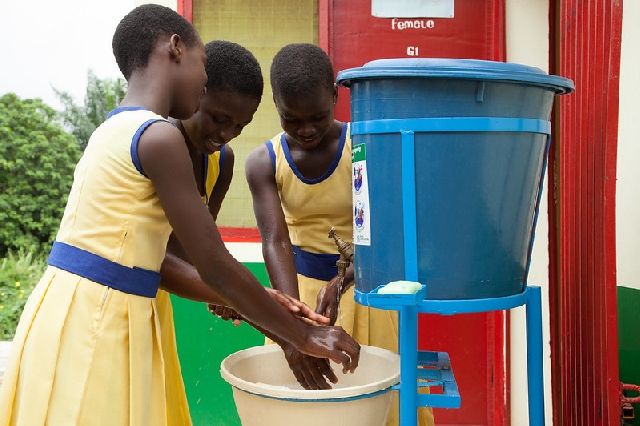 WASH programme
Stakeholders in Ghana’s Water, Sanitation, and Hygiene (WASH) sector are urging the government to prioritize strong financing in the 2025 national budget, set to be presented on Tuesday.
They stress that adequate funding is crucial for bridging the country’s WASH access gap and achieving the Sustainable Development Goal (SDG) 6 on universal access by 2030.
A statement signed by Ibrahim Musah, Head of Policy, Strategy, and Campaigns at WaterAid Ghana, warned that without sustained investment, Ghana risks missing its WASH targets, which could widen inequalities and hinder economic growth.
“As the government embarks on its ‘Resetting Ghana’ agenda, the upcoming national budget presents a critical opportunity to transform the WASH sector,” the statement emphasized.
The statement also reminded the government of the 2024 election manifesto pledge by President John Dramani Mahama and the National Democratic Congress (NDC) to expand social services, particularly in WASH, as part of their broader equity and social justice agenda.
Additionally, it highlighted the NDC’s endorsement of the WASH Manifesto prepared by the Coalition of NGOs in Water and Sanitation (CONIWAS) ahead of the 2024 elections.
This manifesto calls for increased financing and policy attention to ensure universal access to basic water and sanitation services by 2030.
“With the budget announcement approaching, stakeholders are eager to see how these commitments will be translated into actionable policies and funding allocations to drive sustainable national development,” the statement noted.
The 2021 Population and Housing Census (PHC) by the Ghana Statistical Service (GSS) estimates Ghana’s water coverage at 87.7%, but significant disparities remain between urban and rural areas, as well as between men and women, boys and girls.
Sanitation coverage, however, remains critically low at 25.3%, with poor solid and liquid waste management across the country.
Hygiene coverage stands at 50%, with lingering challenges in promoting effective hand hygiene post-COVID-19.
Despite the sector’s critical role, it has remained one of the least funded, receiving less than 1% of government expenditure since 2016, while largely relying on donor funding, which stakeholders argue is unsustainable.
According to estimates from the Ghana WASH Sector Development Programme, Ghana requires an investment of $1.7 billion per year until 2030 to achieve universal WASH access.
“To accelerate SDG-6 achievement, the government must increase investments in sanitation and hygiene at the household, school, and healthcare facility levels,” the statement urged.
As Ghana prepares to unveil its financial plan for 2025, WASH sector advocates are calling on the government to match its commitments with decisive action by prioritizing increased financing and sustainable investments in the sector.
Source: Classfmonline.com/Rebecca Lartey


Trending News
COCOBOD CEO engages Council of State on reforms to sustain cocoa sector
09:38
Foreign Affairs Ministry announces two new appointments
15:43
W/R: 2 arrested over viral assault video involving teenagers at Effiakuma
20:02
Mahama unveils initiatives to boost healthcare, food security and education
13:49
Empowering Ghana’s future: Japan’s scholarship programme drives a new era of Ghana-Japan co-creation and leadership development
18:50
Age should not define Leadership – John Alexander Ackon backs Dr. Frank Amoakohene’s performance in Ashanti Region
11:11
O/R: Police seizes cannabis worth over GHS1.4m from impounded truck
19:31
Teachers and parents demand sacking of Anloga District Education Director over alleged mismanagement
18:20
Kojo Oppong Nkrumah slams gov't's 24-Hour Economy law as 'PR stunt,' says it lacks legal muscle
12:24
Ramadan fasting slows voting in Ayawaso East by-election
09:59