
LECERP launches nationwide assessment of GIFEC digital inclusion programmes
Technology
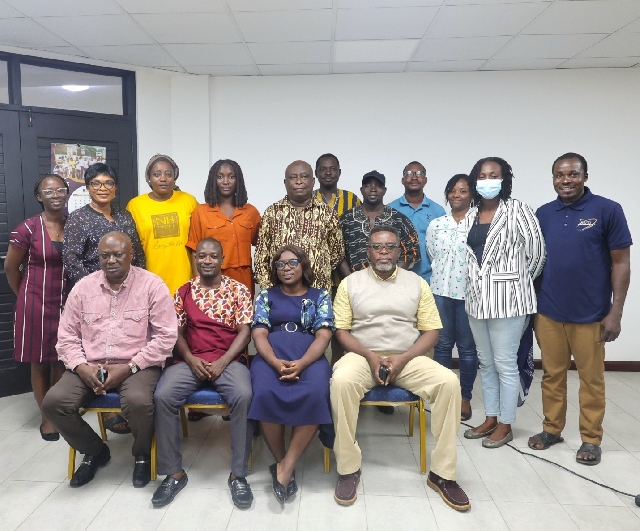 LECERP team
The Legon Centre for Education Research and Policy (LECERP) has commenced nationwide fieldwork for a comprehensive impact assessment of digital inclusion initiatives implemented by the Ghana Investment Fund for Electronic Communications (GIFEC).
The study, funded by the Deutsche Gesellschaft für Internationale Zusammenarbeit (GIZ), is part of a collaborative effort to evaluate the reach and effectiveness of GIFEC programmes in bridging Ghana’s digital divide.
The assessment will examine interventions such as rural connectivity projects, cyber laboratories, and digital skills training, with a focus on promoting inclusion, gender empowerment, and youth development in underserved communities.
As part of preparations, LECERP trained 40 enumerators from July 29 to August 1, 2025, in Accra.
The four-day training equipped participants with skills in ethical data collection, Computer-Assisted Personal Interviewing (CAPI), and adherence to strict data quality protocols.
Fieldwork is scheduled to take place nationwide from August 5 to 29, 2025.
Dr. Clement Adamba, Director of LECERP, welcomed participants and highlighted the importance of professionalism and quality in programme evaluation.
“The Centre may be new, but our team has extensive experience. Programme evaluation requires nuance beyond traditional household surveys, and we expect diligence and precision in the field,” he stated.
Dr. Musah Sulemana, Head of Research at GIFEC, outlined the scope of the study, explaining that it will assess all GIFEC-funded initiatives under three pillars: Universal Access, Socio-economic Impact, and Institutional and Partnerships Framework.
“We expect the final report to cover all interventions—from telephony projects to cyber labs and digital skills training across the country,” he noted.
Dr. Innocent Agbelie, Research Fellow at LECERP, reminded enumerators of their ethical responsibilities.
“Protecting the integrity of data and maintaining respondents’ trust is crucial.
The quality of this study depends on your professionalism and adherence to ethical standards in the field,” he said.
The impact assessment will evaluate not only improvements in digital access but also the sustainability of GIFEC projects, stakeholder engagement, and growth of Micro, Small, and Medium Enterprises (MSMEs), particularly female-led businesses. It will also document best practices, identify challenges, and capture experiences of vulnerable groups, including women, girls, and persons with disabilities.
The findings are expected to inform Ghana’s national digital inclusion strategies and guide future policies to ensure equitable access to information and communication technologies.
Also present at the training were GIFEC officials Mr. Osman Mohammed Tanko and Mr. Umar Abdul-Wahab, who actively participated in the sessions.
Source: Classfmonline.com/Cecil Mensah


Trending News
Minerals Commission Summit: Armah-Kofi Buah pushes bold local content reforms to ensure Ghana’s mining wealth benefits citizens
15:24
8 Ghanaians killed in terrorist attack in Burkina Faso; Gov't issues new travel guidelines
20:26
Interior Minister meets Lebanese security officials to deepen bilateral cooperation
09:21
Gideon Boako reconciles opposing camps in Tano North NPP
12:41
Mahama meets UN Chief, discusses African security, democracy
23:31
IShowSpeed secures Ghanaian passport, relishes dual citizenship
10:33
Tema Central: Minority demands arrests over ‘unlawful’ closure of NHIS office, immediate resumption of service
16:12
Asikado Ketan MP calls for stronger national recognition of Fugu
17:14
Non-teaching university unions gives GTEC two-week ultimatum to halt retirement policy
07:25
A/R: Tension in Manso Akwasiso after student dies during anti-galamsey operation
14:00