
Opoku Mensah questions: When does personal conduct become institutional responsibility?
News
 Yaw Opoku Mensah
A former spokesperson at the Ministry of Education, Yaw Opoku Mensah has questioned the extent to which the Ghana Education Service (GES) and teacher unions should be involved in a case involving a teacher and a student of Nyinahin Catholic Senior High School who were captured in a viral physical altercation.
Opoku Mensah’s comment, added to a growing debate over the handling of the incident, which triggered calls for intervention from education authorities and a threat of industrial action by teachers.
The incident occurred at a hostel near what is perceived to be affiliated with Nyinahin Catholic Senior High School in the Atwima Mponua District, where a teacher, who also works as a hostel caretaker, was arrested after a video showing an altercation with a female student circulated widely on social media.
The teacher was detained as authorities investigated the matter, prompting the Ghana National Association of Teachers (GNAT) in the Ashanti Region to demand his release and warn that teachers could boycott the ongoing West African Senior School Certificate Examination (WASSCE).
GNAT later said educators would consider industrial action if the teacher was not granted bail, while also calling for due process in the handling of the case.
However, the legal proceedings ended on Wednesday (10 June) after the Toase District Court struck out the case involving the teacher and student.
Reacting to the development, the former Education Ministry spokesperson argued that the controversy required a clearer distinction between personal conduct and institutional responsibility.
He said the GES does not operate private hostels and questioned whether an incident allegedly involving a privately managed hostel arrangement should automatically become an institutional matter.
“If the incident occurred within a privately managed hostel facility, then the relationship was essentially between two private individuals: one acting as a hostel manager and the other as a resident,” he argued.
He said the fact that one of the parties is a teacher does not necessarily mean every action outside official duties should be treated as an institutional matter.
The former spokesperson questioned why teacher unions and education authorities were being heavily drawn into the matter unless there was evidence linking the alleged conduct to the teacher’s official responsibilities, the school authority, or the operations of the institution.
The debate has renewed discussions about the boundaries of professional accountability for teachers, particularly in cases involving school employees and students outside formal classroom activities.
Authorities have not indicated whether further administrative action will be taken against the teacher following the court’s decision.
Source: classfmonline.com


Trending News

Government announces transitional measures for LLB graduates under new legal education act
01:15
Kwahu East DCE distributes 1,000 desks to schools to address furniture shortage
20:51
Minority demands Anti-Flood Taskforce report amid renewed Accra flooding concerns
01:27
Ghana First Alliance to stage demonstration over attacks on Ghanaians in South Africa
10:32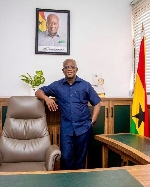
SIGA boss warns against commercialisation of public recognition
10:27
Kumasi to deploy sanitation guards in renewed clean-up drive
16:19
Nii Lante Vanderpuye resigns as DRIP Coordinator to pursue NDC national executive role
01:00
Dredge masters leads anti flood push as encroachment blocks drains.
17:17
From poetry to global classrooms: How ACE Consult is shaping Ghana’s next generation of leaders
01:32
Government to extend BECE duration to ease pressure on candidates – Haruna Iddrisu
10:27
