
Dr. Segun Adebayo calls for indigenous education and research reforms across Africa
Education
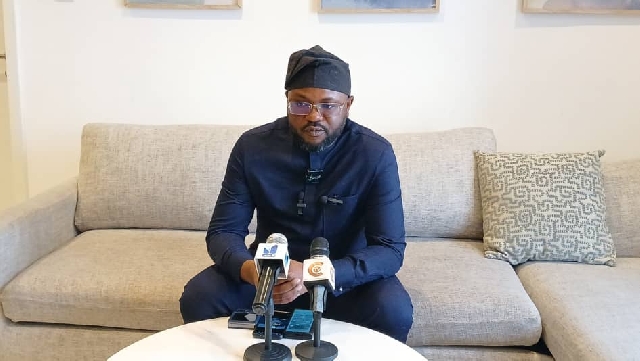 Dr. Segun Adebayo
Dr. Segun Adebayo, Executive Director of the Centre for African Policy Research and Advisory, has raised concerns about what he describes as Africa’s continued dependence on Western models of education, science, and research, urging governments and institutions to prioritise home-grown solutions to the continent’s development challenges.
Speaking during a media engagement, Dr. Adebayo questioned the widespread adoption of Western curricula in African schools, arguing that the system often prepares students for opportunities abroad rather than equipping them to address local needs.
According to him, this approach has contributed to persistent brain drain and weakened Africa’s capacity to build strong indigenous research ecosystems.
“Our education and research systems must reflect our realities and solve our problems,” he said, stressing that Africa cannot rely indefinitely on imported knowledge and technologies.
Dr. Adebayo also expressed concern about what he described as limited investment in local scientific innovation, noting that many African institutions depend heavily on external research frameworks.
He warned that such reliance hampers the continent’s ability to independently assess technologies introduced into its markets.
Citing examples from the agricultural sector, he called for more rigorous risk assessments of Genetically Modified Organisms (GMOs) and agrochemicals before adoption.
He referenced ongoing global debates around chemicals such as glyphosate and atrazine, which have faced scrutiny in some countries over potential environmental and health impacts.
He further criticised policies such as the Plant Variety Protection Act, arguing that some regulatory frameworks tend to favour multinational seed companies over smallholder farmers, potentially undermining traditional farming practices and seed sovereignty.
Dr. Adebayo emphasised that African countries must strengthen their own research institutions and encourage critical thinking among students and policymakers to ensure that imported technologies and policies are adapted to local contexts.
He urged African leaders, scientists, and academic institutions to invest in indigenous knowledge systems, protect farmers and consumers, and develop context-specific solutions tailored to the continent’s social, economic, and environmental realities.
“The future of Africa depends on our ability to take ownership of our education, science, and development,” he said.
Source: Classfmonline.com/Edem Afanou


Trending News
Botswana, Namibia, Zambia show borderless trade is possible, Says Dlamini-Zuma
16:03
Gov’t to finish 30 stalled Community Day SHSs, roll out new school projects – Majority Leader
21:22
Health Minister calls for audit of health facilities in Oti Region
07:10
A/R: Police place GHS50k bounty on suspect Hoyeefi over Nkaseim robbery
19:17
C/R: Newborn baby girl abandoned at Gomoa Nyanyano; police launch manhunt for mother
16:01
FT Global Investment delegation call on Deputy Defence Minister over GAF housing project
18:47
E/R: Man 30 completes suicide at Kyebi-Amanfrom
06:44
Rapid urban growth worsening housing crisis in Ghana — Works and Housing Minister
14:34
Agona East to hold education month activities
16:47
'Bawumia is no match for NDC': Majority overjoyed for NPP's flagbearer choice
19:58
