

IFEST Exec Dir calls for deeper interschool assessment over poor 2025 WASSCE results
Education
 Executive Director of the Institute of Education Studies (IFEST), Dr Peter Anti
The Executive Director of the Institute of Education Studies (IFEST), Dr Peter Anti, has called for a deeper assessment into the 2025 WASSCE performance.
This, he said, would help identify the specific institutions that recorded sharp drops in performance and the possible factors behind those declines.
His remarks came after WAEC released the provisional results for the 2025 examination, which revealed significant drops across several core subjects.
A total of 461,736 candidates from 1,021 schools sat for the exams — a 0.24% increase from 2024 — while 5,821 candidates, representing 1.26%, were absent.
The most alarming statistic was in Core Mathematics, where more than half of the candidates, some 220,008 students, failed.
WAEC has described this as the worst Core Mathematics performance in seven years.
Speaking in an interview, Dr Anti stressed that the national statistics provided by WAEC did not reflect the full story of what happened in schools across the country. He insisted that meaningful analysis must begin with school-level data rather than broad national summaries.
“These drivers are what we need to go into the data and look for,” he added. “We need to identify the individual schools that didn’t perform well this year, and then ask ourselves what really happened. These are policy issues.”
He further cautioned policymakers and the public against using national averages as the basis for analysing the sharp decline in the 2025 WASSCE performance.
“If we want to understand what is happening, you don’t use the national averages,” he said. “You have to go to the schools and look at their performances over the years, or for that particular year that the exam produced the average. Then you would know which schools performed extremely well or poorly during that period.”
Education analysts have also raised concerns about teaching quality, supervision, learning resources, and student preparedness across many schools.
Dr Anti warned that Ghana risked drawing misleading conclusions if it failed to examine performance disparities between schools.
He emphasised that any policy reforms aimed at improving examination outcomes must be grounded in evidence from the school level rather than broad national averages.
Source: Classfmonline.com/Zita Okwang


Trending News
Commuters decry overcharging as drivers demand GHS15–17 for Nungua route despite mayor’s warning
21:11
Ahanta West Blue Water Guards appeal for logistics to boost anti-galamsey operations
04:40
PK Amaobeng Foundation set to celebrate new leaders at today's graduation and induction ceremony
06:24
Ghana reaffirms commitment to greener, safer maritime sector at IMO Assembly
15:42
'State support is partnership, not takeover': Catholic Bishops' Conference & Christian Council on religious freedoms at missionary school
00:22
Minority Caucus rejects court ruling nullifying Kpandai parliamentary election
06:50
A/R: Police arrest suspect for shooting incident at funeral in Obuasi
19:18
President Mahama marks 67th birthday visiting children's wards
00:20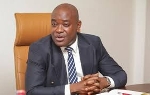
Concerned University Lecturers question transparency in GTEC boss’ academic credentials and promotion history
21:29
Teacher salaries: Intervene now or risk strikes, says GNAT to MoE, GES
16:38
