
Nearly half of Ghanaians say military rule can be justified, if gov'ts fail to fight corruption – UG Report
General News
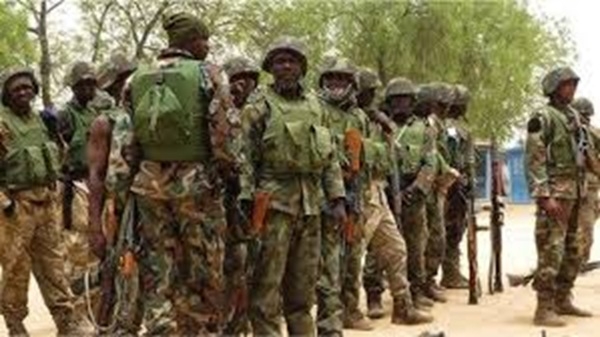 Miliatry men
A new report by the Political Science Department of the University of Ghana has revealed that a significant proportion of Ghanaians believe military intervention in governance can be justified under certain circumstances, despite a general preference for democratic rule.
The report, titled Undertones and Public Perceptions of Military Rule and Democracy in Ghana, found that approximately 43 per cent of respondents believe military takeovers are sometimes justified.
The study surveyed 6,719 respondents across all 16 regions of the country and examined public attitudes towards democracy, governance, corruption, and military rule.
According to the findings, the Savannah, Upper West, Upper East, Northern, and North East regions recorded the highest levels of support for the view that military rule can sometimes be justified.
The report also identified the Eastern Region as a notable outlier, with 77 per cent of respondents indicating that military rule could be justified under certain conditions.
Researchers noted that the findings point to growing frustrations among some citizens regarding governance outcomes, particularly in relation to economic performance and corruption.
The report revealed that 34 per cent of respondents would support military rule if democratic governance fails to improve economic conditions, while 28 per cent said they would consider supporting military intervention if democracy is unable to effectively address corruption.
The findings suggest that public dissatisfaction is largely linked to perceived shortcomings in economic management and accountability rather than outright rejection of democratic governance.
Speaking after the presentation of the report on June 9, Isaac Owusu Mensah, Head of the Political Science Department at the University of Ghana, stressed that most Ghanaians continue to favour democratic governance despite concerns about its performance.
According to him, respondents acknowledged the challenges associated with democracy but still viewed it as preferable to military rule because it guarantees fundamental human rights and provides citizens with the opportunity to hold leaders accountable through elections.
He explained that while many citizens are dissatisfied with issues such as corruption and the pace of economic improvement, they remain committed to democratic principles and institutions.
The report recommends strengthening transparency, improving accountability mechanisms, and ensuring that governments respond more effectively to the needs of citizens.
Researchers argue that addressing corruption, improving public service delivery, and creating better economic opportunities will be critical to sustaining public confidence in Ghana’s democratic system.
The study concludes that although democratic governance continues to enjoy broad support, growing concerns about economic hardship and corruption underscore the need for reforms that deliver tangible benefits to citizens and reinforce trust in democratic institutions.
Source: Classfmonline.com/Cecil Mensah


Trending News

Cabinet begins final review of government's position on constitutional reforms
13:04
'We can build a maintenance culture' – VP Opoku-Agyemang calls for greater role for technicians
18:38
Anfoega Wadamaxe residents plead for completion of abandoned road, electricity supply
12:05
Pig Farm Assembly Member calls for law to make national cleanup monthly and compulsory
20:31
Nkokɔ Nkitinkiti: Minister finds possible silver lining as beneficiaries flout rules by eating breeding stock
16:19
Kwame Agbodza warns contractors: Submit work plans or risk payment cuts
05:43
Woman, 61, gives birth through Mary Lucy Hospital's Stem Cell-Enhanced IVF procedure
19:17
Community leaders engage Korle Woko residents over concerns about alleged prostitution
12:42
Don’t intimidate citizens; explain your actions – VP tells security agencies
18:44
Okatakyie Afrifa Mensah's team confirms police custody, alleges 4 associates sustained gunshot injuries
04:04
