
Ghana’s silent health crisis takes centre stage at CHAG Conference as GMTF seeks stronger partnership
Health News
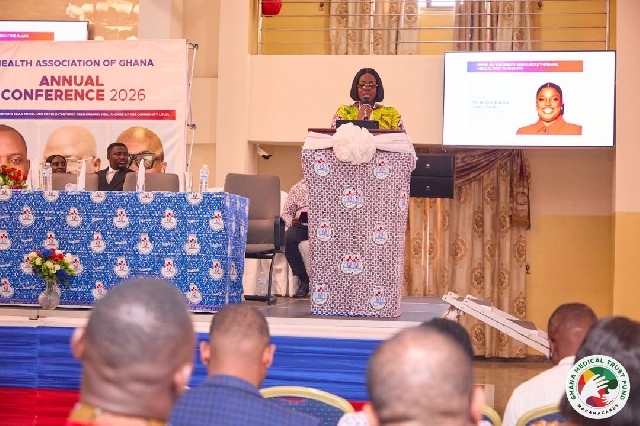 Ghana Medical Trust Fund (Pic):
A growing health crisis is quietly unfolding across Ghana, leaving many families financially burdened, children out of school, and patients struggling to access life-saving treatment, according to the Ghana Medical Trust Fund (GMTF).
The issue was highlighted by the Administrator of the GMTF, Adjoa Obuobia Darko-Opoku, at the 2026 Annual Conference of the Christian Health Association of Ghana (CHAG) in Koforidua, held under the theme “Positioning CHAG to Deliver People-Centred Free Primary Healthcare at the Community Level.”
She said chronic diseases such as cancer, kidney failure, stroke, cardiovascular diseases, diabetes, sickle cell disease and chronic respiratory illnesses have become a national emergency.
“These conditions are no longer diseases affecting only a few. They have become a national challenge, a social challenge, an economic challenge and, perhaps most importantly, a human challenge,” she told participants including medical directors, health professionals, development partners and healthcare administrators.
Ms Darko-Opoku said the impact of these illnesses is often felt most sharply within households, where families are forced to make difficult financial choices in order to access care.
She noted that many patients delay treatment due to inability to pay, while others exhaust life savings, sell assets or withdraw children from school to fund medical care.
“For far too many Ghanaians, illness does not only threaten life. It threatens livelihoods. It threatens dignity. It threatens the future of entire families,” she said.
She outlined the vision of the Ghana Medical Trust Fund, which was established under President John Dramani Mahama to address financing gaps in the treatment of chronic illnesses. The Fund aims to ensure that no Ghanaian is denied life-saving healthcare due to financial constraints and that families are not pushed further into poverty as a result of illness.
According to her, the Fund is anchored on four key pillars: financial support for patients with chronic diseases, investment in medical equipment and healthcare infrastructure, strengthening specialist healthcare training, and supporting research and innovation.
Ms Darko-Opoku also disclosed that consultations have been held with the Ministry of Health, the National Health Insurance Authority, healthcare providers, development partners, patient groups and other stakeholders to shape the Fund’s implementation.
She said a nationwide needs assessment revealed significant gaps in specialist equipment, infrastructure and workforce capacity, despite the dedication of healthcare professionals working under challenging conditions.
She further shared accounts from interactions with patients, including parents determined to survive for their children and young people continuing treatment while pursuing their ambitions.
“These encounters have reinforced one important truth. Healthcare is ultimately about people; not systems, not budgets, not policies. Behind every diagnosis is a human story. Behind every hospital folder is a family,” she said.
The GMTF Administrator also called for stronger collaboration between the Ghana Medical Trust Fund and CHAG, describing CHAG facilities as central to healthcare delivery in many communities.
She noted that CHAG facilities often serve as the first point of care for births, vaccinations, treatment and end-of-life care in several parts of the country.
Ms Darko-Opoku outlined a future where access to specialised healthcare is not determined by income or location, and where patients are not pushed into financial distress due to illness.
She stressed that achieving this vision would require collaboration between government institutions, faith-based healthcare providers, development partners, academia, civil society organisations and local communities.
While acknowledging that the Ghana Medical Trust Fund is still at an early stage, she highlighted a pilot programme that supported 50 patients and tested operational systems and stakeholder engagement.
“The journey ahead remains long. The challenges remain significant. But our determination remains stronger,” she said.
She added that addressing the growing burden of chronic diseases would require sustained partnerships, innovative financing and a collective national commitment to equitable healthcare access.
Source: classfmonline.com


Trending News

A/R: Police arrest multiple suspected drug peddlers and seize large quantities of narcotics in Kumasi
19:21
V/R: Road infrastructure boosted under government 'Big Push' initiative as accident concerns mount
03:04
Fathers must lead family transformation to address social challenges – Apostle Agye-Kwaf
23:56
Free Primary Health Care: Treat it as your own project – Health Minister charges MMDCEs
21:09
Mahama announces 3 international panels to advance reparatory justice campaign
15:09
Police warn WASSCE candidates against violence and vandalism after exams
15:55
Mahama calls for stronger democratic governance and greater citizen participation
19:06
Police deploy special operations team to Nkwanta after deadly attacks
02:59
NADMO confirms 18 deaths as floods, landslides hit 13 Central Region districts
23:52
Police investigate shooting incident involving Adwoa Safo at Kwabenya
19:02
