

Japan PM joins fight for more female toilets in parliament
World News
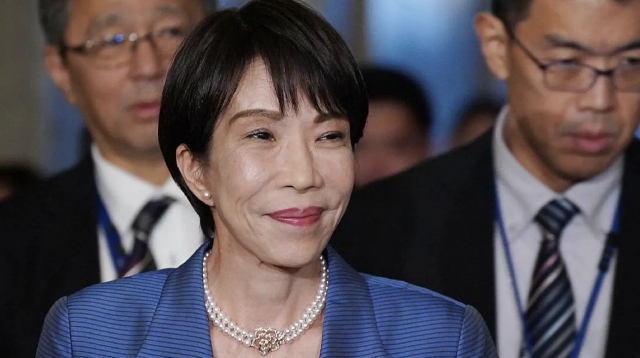 AFP via Getty Images (Pic): Japan's first female leader Sanae Takaichi is among one of 58 women MPs who signed the petition for more female toilets
Japan's Prime Minister Sanae Takaichi is among some 60 female lawmakers petitioning for more women's toilets in the parliament building to match their growing representation in the legislature.
A record 73 women were elected into the 465-seat Lower House in October 2024, exceeding the previous high of 54 in 2009.
One opposition lawmaker, Yasuko Komiyama, said there were often "long queues in front of the restroom... before plenary sessions start", and quoted another MP who said she had "given up" going to the toilet before a session began.
There is one female toilet with two cubicles near the plenary chamber, though the entire building itself has nine female toilets with 22 cubicles.
There are a total of 12 men's toilets with 67 stalls and urinals across the building, according to local media reports.
The current situation is "often inconvenient" because female staff and visitors also share the toilets, said Ms Komiyama from the opposition Constitutional Democratic Party.
"I want to raise my voice and prepare myself for the day when women hold more than 30% of [parliamentary seats] in the future," she wrote in a post on Facebook.
Japan's parliament building was built in 1936, a decade before women were given the right to vote in 1945. The first women were appointed to parliament in 1946.
The parliament building is a sprawling three-storey structure, with a central portion that is nine storeys high. The building occupies 13,356 square metres (143,800 sq ft), the equivalent of about two football pitches, with a total floor area of 53,464 square metres.
"If the administration is serious about promoting women's empowerment, I believe we can count on their understanding and cooperation," Komiyama said, according to Japanese media.
Chair of the Lower House committee Yasukazu Hamada has "expressed a willingness" to consider the proposal for more women's toilets, said an Asahi Shimbun report.
The Japanese government earlier set a target of having 30% of leadership roles across all sectors of society held by women by 2020, but at the end of that year the timeframe was quietly pushed back by a decade.
Women currently hold nearly 16% of the seats in the Lower House and about a third – or 42 out of 125 seats – in the Upper House.
Takaichi, who became Japan's first female leader in October last year, had pledged to raise female representation in her cabinet to levels comparable to Nordic countries, which hold the top spots in terms of female leadership.
But she has appointed just two other women to her 19-member cabinet.
In Japan, the dearth of women's restrooms extends beyond the legislative chamber.
Long lines in front of women's public restrooms are a common sight nationwide.
Former Prime Minister Shigeru Ishiba had said his government would look into "enhancing women's restroom facilities" to make Japan a society where "women can live their lives with peace of mind".
Source: bbc.com


Trending News
GJA slams GNFS PRO, calls for immediate removal
16:21
Mahama reacts to viral Kade SHS video, demands justice for assaulted Teacher
13:50
Vice President urges students to embrace integrity and service at PENSA Ghana conference
02:40
CDM accuses GoldBod CEO of contradictions over Gold-for-Reserves losses
16:40
V/R: Asogli traditional authorities urge extension of small arms amnesty deadline
17:36
GNAT declares zero tolerance for assaults on teachers in 2026
13:45
Deputy Defence Minister urges NDC members to remain united
02:28
CDM rejects claims that BoG losses were due to Gold Purchase Programme
16:35
V/R: Small Arms Commission calls on regional minister and Asogli Traditional Council to support ongoing gun amnesty
17:15
Group storms Supreme Court to seek clarity on Mahama's third term bid
13:26
