
Ghana targets investment-grade credit rating within three years- Ato Forson
Business
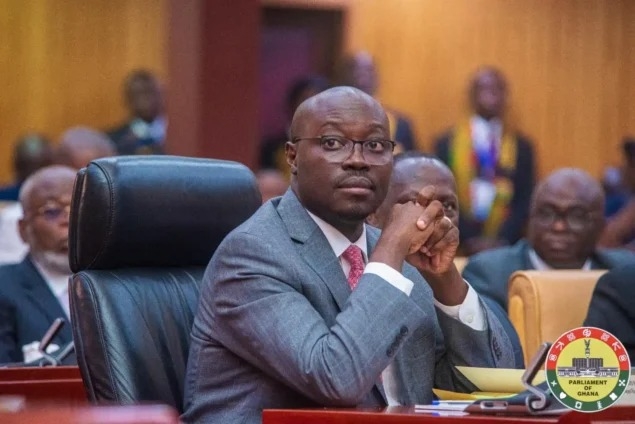 Casiel Ato Forson
Ghana is targeting a return to investment-grade credit status within the next three years as part of efforts to consolidate its economic recovery, strengthen fiscal credibility, and restore investor confidence following the country's 2022 debt crisis.
Finance Minister Dr. Cassiel Ato Forson disclosed this during an interview with Bloomberg on the sidelines of the Ghana-UK Investment Summit 2026 in London, where he outlined the government's medium-term strategy for sustaining macroeconomic stability and rebuilding Ghana's standing in international financial markets.
According to the Minister, the government has made significant progress in reversing the effects of the economic challenges that culminated in Ghana's sovereign debt default in 2022, which led to a loss of market access and multiple credit rating downgrades.
“We have successfully moved from an unsustainable debt position to a moderate risk of debt distress,” Dr. Forson stated.
He explained that while the economy has shown signs of recovery, the government's priority is to ensure that the gains achieved are sustainable and recognized by global investors as evidence of long-term economic stability.
Dr. Forson acknowledged that despite improvements in key economic indicators, some investors remain cautious due to the impact of the 2022 crisis, which saw soaring inflation, currency depreciation, rising debt servicing costs, and extensive debt restructuring.
He said restoring credibility in international financial markets remains a central objective of the government's economic agenda.
“Some investors remain cautious because of what happened in 2022. We need to send a clear signal that stability is here to stay,” he said.
The Finance Minister noted that addressing investor concerns will require consistent policy implementation, fiscal discipline, and sustained economic reforms.
As part of efforts to strengthen confidence in Ghana's economic management, Dr. Forson revealed that the country is nearing the completion of its current programme with the International Monetary Fund (IMF), with the final review awaiting approval by the IMF Executive Board.
He disclosed that Ghana intends to transition into a Policy Coordination Instrument (PCI) arrangement with the IMF after the current programme ends.
Unlike traditional IMF support programmes, the PCI does not provide direct financial assistance but offers a framework for monitoring economic reforms and maintaining policy discipline.
Dr. Forson described the arrangement as an important credibility-enhancing tool that will reinforce confidence among investors and development partners.
“Ghana has emerged from a difficult period. What we need now is to demonstrate that stability is sustainable,” he stated.
The Minister said achieving investment-grade status would represent a major milestone in Ghana's economic recovery journey.
Investment-grade ratings enable countries to access international capital markets at lower borrowing costs and attract long-term institutional investors, including pension funds and sovereign wealth funds.
Dr. Forson noted that although Ghana remains in speculative-grade territory following the debt crisis, recent improvements in debt sustainability and macroeconomic management have laid the foundation for further upgrades.
He stressed that reaching investment-grade status within the targeted timeframe will require sustained fiscal discipline, structural reforms, and a strong commitment to policy consistency.
The Finance Minister identified reforms within state-owned enterprises and the energy sector as critical components of the government's strategy to address long-standing fiscal vulnerabilities.
He said efforts are underway to improve efficiency, reduce financial risks, and strengthen public sector governance while maintaining prudent fiscal management.
“We are putting in place reforms that ensure fiscal discipline is maintained over time,” he said.
According to him, the objective is not only to reduce debt levels but also to address the structural weaknesses that have historically contributed to fiscal pressures.
Dr. Forson further highlighted the government's efforts to strengthen Ghana's economic buffers against future shocks.
He pointed to improvements in the country's external position, supported by strong gold and cocoa exports as well as increased oil production, which have contributed to stronger foreign exchange reserves.
These developments, he said, are helping to enhance currency stability and improve Ghana's ability to withstand global economic uncertainties.
“The objective is to ensure that Ghana remains stable, predictable and attractive to investors in the long term,” he said.
The Finance Minister expressed confidence that continued reforms, policy discipline, and strategic partnerships will position Ghana to regain investment-grade status and secure stronger, more sustainable economic growth in the years ahead.
Source: Classfmonline.com/Cecil Mensah


Trending News
NDC sets June 18 deadline for payment of outstanding dues ahead of internal elections
12:24
Rotary Club inaugurates mechanised borehole to end decades-long water crisis in Ninting
13:38
Patients appeal for government intervention as KATH doctors’ strike disrupts services
22:49
Finance Ministry releases over GHS1.6 billion to MOFA, covering 85% of 2026 allocation
17:45
Accra to host Ghana Global Leadership Summit and Awards 2026
02:28
Bagbin rejects foreign influence on Africa’s laws and family values
16:33
IEA poll shows 58.9% approval for President Mahama amid strong economic indicators
12:09
Stakeholders push for sustainable funding for Greater Accra Waste
12:09
Stranded patients at KATH as suspended CEO appeals for staff to end strike
22:01
North East Region to plant 445,000 trees under Tree for Life initiative
18:36