

'English-only Parliament censors majority' — Prof Kwesi Yankah warns on language & democracy
Politics
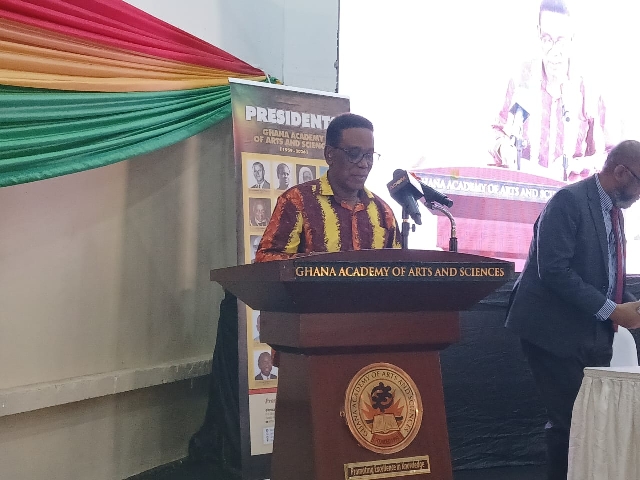 Emeritus Professor Kwesi Yankah
Ghana’s insistence on English as the language of Parliament and governance amounts to “subtle and pervasive censorship” that silences the majority, Emeritus Professor Kwesi Yankah has warned.
Delivering a keynote on Language and Political Participation at a symposium co-organised by Indiana University and local partners, Prof. Yankah said Ghana’s 30-year democracy has measured success by economic milestones “without critical assessment of inclusiveness.”
“Stakeholder participation is a key ingredient in democracy. But the efficacy of one’s participation depends on one’s control over linguistic resources,” he said on June 18, 2026.
He argued that while colonial languages dominate executive, legislative, and judicial forums, only a “tiny minority” of Ghanaians have working knowledge of English. This “presents a paradox in democratic governance” and risks entrenching minority rule.
“The popular index of education is one’s ability to speak English. As long as one lacks proficiency in the colonial language, one is considered illiterate, with all its derogatory connotations,” Yankah said.
He cited Parliament’s Standing Orders, which require proceedings in English and permit local languages only “provided facilities exist for interpretation.” Members using Ghanaian languages must often provide their own translations. “It amounts to saying, if you want to use a Ghanaian language here, we wish you good luck… you will do your own translation,” he said.
Yankah recounted being interrupted in Parliament in 2019 for allegedly reading a speech, and praised former Amenfi East MP Mercy Adu-Gyamfi, who had only a BECE certificate but delivered a notable speech after months of preparation. He noted 89% of MPs in the 7th Parliament had at least a bachelor’s degree, yet Standing Orders are “not kind to newcomers learning the rules of parliamentary discourse.”
While the Constitution guarantees freedom of speech and mandates interpreters in court, Yankah said it does not sufficiently ensure stakeholder participation. He welcomed signs of change in the 9th Parliament, where an MP was “grudgingly permitted” to contribute in a Ghanaian language in February 2025.
“The importance of literacy is indispensable. But formal education should not be confused with wisdom,” he said, warning against dismissing oral knowledge and African languages as inferior.
The symposium theme, he noted, “has often been accepted and tabled… only to be ignored by policymakers whose pockets are not worth it.”
Source: classfmonline.com


Trending News
Government announces energy infrastructure projects for Central Region
15:13
Volta Regional Minister commends media for promoting peace and national cohesion
16:00
Cape Coast Queen Mother calls for thorough investigation into murder of UCC student
15:44
Six Ghanaian Students in UK to protest over delayed scholarship payments
08:37
E/R: 6 arrested as security agencies raid China Mall construction site in Koforidua
04:18
Gov't to pursue accountability following receipt of Akosombo substation fire report – Energy Minister
06:38
Mahama announces 3 international panels to advance reparatory justice campaign
15:09
Police warn WASSCE candidates against violence and vandalism after exams
15:55
Interior Minister commissions 13-member committee to probe building collapses
12:46
MFWA challenges Roads Ministry to publish list of competitively awarded contracts
08:17
