

Part(2) of many: Supreme Court pushed to decide validity of 1931 US–UK Extradition Treaty in Ghana
Politics
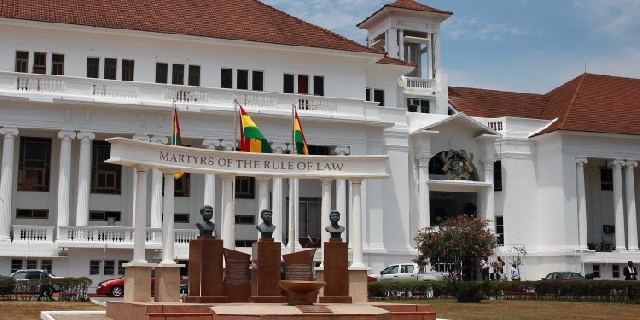 Supreme Court
The Supreme Court had been invited to determine whether a 1931 Extradition Treaty between the United States of America and the United Kingdom forms part of Ghana’s laws under the 1992 Constitution and the Extradition Act, 1960 (Act 22).
The reference was filed by the District Court at Kaneshie, Accra, which posed a constitutional question for interpretation. Specifically, the court is asking whether the Extradition Treaty, signed on December 22, 1931, and which came into force on June 24, 1935, is applicable in Ghana within the meaning of Article 11(1)(d) of the Constitution and Section 3(2) of the Extradition Act.
The issue arises because Article 16 of the treaty expressly extended its application to the Northern Territories of the Gold Coast during the colonial era, raising questions about its continued legal effect after Ghana’s independence.
Extradition Request from the United States
The reference stems from an extradition request submitted to the Government of Ghana by the United States authorities for the surrender of a fugitive, Abiola Ayorinde Kayode, also known as ABK.
The request is based on the 1931 US–UK Extradition Treaty and follows the indictment of the fugitive in the United States on August 21, 2019, for multiple fraud-related offences.
Mr Kayode was formally charged on August 22, 2019, in the United States District Court for the District of Nebraska.
He is accused of being part of a large transnational criminal enterprise involved in numerous financial fraud schemes, alongside co-accused persons identified as Alex Ogunshiakin and Felix Okpoh.
Alleged Fraud Scheme
According to court documents, the criminal network allegedly targeted chief financial officers, controllers and other financial staff of companies through spoofed emails designed to appear as though they were sent by company executives.
The fraudulent emails reportedly instructed recipients to initiate wire transfers, resulting in the defrauding of more than 70 companies.
The victims are said to have suffered combined losses exceeding six million US dollars.
Investigations by US authorities further revealed that the proceeds of the fraud were laundered through a business email compromise scheme, described as Nigerian-based and involving a large, loosely organised network of criminals with specialised roles.
Illicit funds allegedly obtained through the scheme were transferred to bank accounts in China, the United Arab Emirates and several other countries.
Constitutional Implications
The Supreme Court’s determination is expected to clarify whether pre-independence treaties entered into by the United Kingdom on behalf of the Gold Coast, particularly those with territorial limitations, remain enforceable in Ghana today.
The ruling could have significant implications for Ghana’s extradition framework and its cooperation with international partners in combating transnational crime.
Source: Classfmonline.com/Cecil Mensah


Trending News

Accra–Kumasi Expressway to offer alternative route, not replace existing highway – Roads Minister
06:55
Mind your words on Bawku — Otumfuo advises Cletus Avoka
19:11
Ghana launches blue economy strategy to boost national development
07:25
EVE Medical Foundation thanks Vice President for opening KGL–EVE Medical Centre
17:12
$8m elder fraud scheme: US indicts Ghanaian Frederick 'Abu Trica' Kumi, faces up to 20 years in prison
02:46
Trade Minister engages tomato growers and traders to resolve value chain challenges
01:51
Enforce supreme court ruling on Bawku — Asantehene to government
18:56
Kasoa construction workers down tools over poor conditions of service
07:19
Health Minister receives report on Zipline Medical Drone Service
16:59
No apology, but diplomacy: Israel pushes back on Ghana claim
20:43