

GHS to roll out vaccination against elephantiasis, river blindness, and bilharzia in15 endemic regions from June 20 to July 3
News
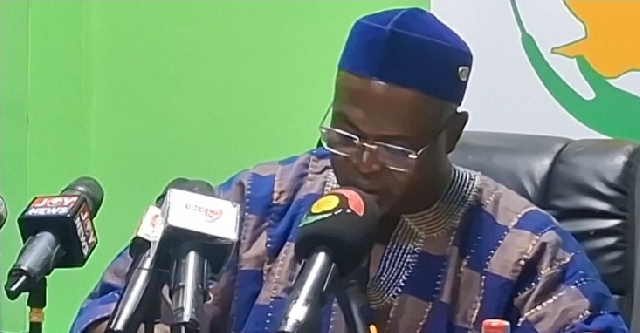 Dr Samuel Kaba Akoriyae, the Director General of the Ghana Health Service (GHS)
The Ghana Health Service (GHS) is set to begin a nationwide mass drug administration exercise aimed at combating three major neglected tropical diseases (NTDs) — elephantiasis, river blindness and bilharzia — in affected communities across the country.
The campaign, scheduled to run from June 20 to July 3, will target eligible residents in 15 endemic regions as part of Ghana's efforts to meet the global goal of eliminating neglected tropical diseases by 2030.
Health authorities say all eligible persons will receive the medications free of charge, with the exception of pregnant women, nursing mothers and children under five years of age.
Although Ghana has made significant progress in tackling NTDs, millions of people remain at risk. The country is currently endemic to 14 of the neglected tropical diseases recognised by the World Health Organization (WHO).
Over the years, Ghana has successfully eliminated Guinea worm disease, sleeping sickness and trachoma. However, several other NTDs continue to pose public health challenges in vulnerable communities.
According to health officials, the prevalence of river blindness has declined considerably, with affected districts reducing from 149 to 86. Cases of elephantiasis have also dropped significantly, with only three districts now classified as endemic. Bilharzia, however, remains widespread and continues to affect communities across the country.
Experts say mass drug administration remains one of the most effective approaches for interrupting disease transmission and protecting at-risk populations.
Director-General of the Ghana Health Service, Dr. Samuel Kaba Akoriyea, urged the public to actively participate in the exercise when health workers visit their communities.
He explained that trained healthcare personnel and community volunteers would distribute safe and effective medicines designed to protect residents from the three diseases.
Dr. Akoriyea encouraged community members to take the medication as prescribed and support efforts to ensure widespread participation in the campaign.
Development partners and civil society organisations have meanwhile called for increased government investment in neglected tropical disease programmes to sustain gains made over the years.
Officials from the World Health Organization believe Ghana remains on track to achieve the global elimination target but stress that greater financial commitment and stronger coordination among stakeholders will be essential.
They also highlighted the critical role of the media in raising public awareness and encouraging community participation in disease control initiatives.
The upcoming exercise is expected to reach approximately 6.7 million people in 86 districts affected by elephantiasis across 15 regions. In addition, about 266,000 residents in two river blindness-endemic districts and more than one million people in 13 bilharzia-endemic districts are expected to benefit from the intervention.
Source: Classfmonline.com/Zita Okwang


Trending News
NE/R: Free Primary Healthcare launched
14:35
A/R: 2 jailed over armed robbery at New Edubiase fuel station
05:43
Court annuls GTEC directive barring UNEM degrees, cites breach of due process
03:58
President Mahama calls for stronger trade and investment ties at Ghana–EU partnership dialogue
03:21
Rainstorm expected to sweep across Ghana-GMET
12:21
National College of Defence Studies conducts research on national cohesion in Volta Region
14:27
Police arrest suspect in murder of UCC student
05:37
Suspected armed robber dies with gunshot wound after taxi hijacking and crash in Accra
03:45
GRA honours staff who completed leadership development programmes
03:02
Forestry Commission condemns mob attack on timber checkpoint facility in Bono East
02:21
