
Ghana extends offshore oil licences to 2040, revises gas agreement to boost supply and cut prices
News
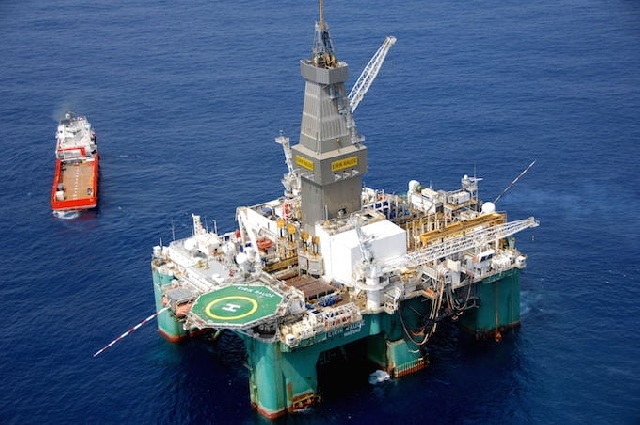 Oil field
Parliament has approved a new Memorandum of Understanding (MoU) between the Government of Ghana, the Ghana National Petroleum Corporation (GNPC), and their offshore partners, clearing the way for the extension of petroleum agreements in the West Cape Three Points (WCTP) and Deepwater Tano (DWT) blocks until December 31, 2040.
The existing licences, which were due to lapse in 2034 for WCTP and 2036 for DWT, have now been prolonged on the back of a planned US$2 billion capital injection. The funding is earmarked for the drilling of a minimum of 10 and up to 20 additional wells, alongside critical subsea installations needed to keep output steady at the Jubilee Field and the Tweneboa Enyenra Ntomme Field (TEN).
Officials justified the decision as a strategic move to safeguard production from ageing assets and ensure operational stability in Ghana’s upstream sector. By retaining the current operators under the existing contractual structure, government argues it will avoid the uncertainties that often accompany licence transitions.
According to proponents, the arrangement reduces the risk of operational downtime, protects accumulated technical expertise, and shields the sector from the disruptions that could arise from a change in operatorship before the natural end of the agreements.
The Minority Caucus, however, voiced reservations during Thursday’s debate, questioning the timing of the extensions. Members warned that renewing contracts several years before their expiration could create an expectation among other industry players for similar early concessions.
They maintained that the country still has adequate time to renegotiate improved terms closer to the original deadlines, rather than committing prematurely.
In a related development, Parliament endorsed amendments to the Master Gas Agreement between the state, GNPC and the contractors. The revised terms are projected to cut gas prices by 18 per cent and raise daily supply volumes from 100 million standard cubic feet to 130 million, with scope for an additional 50 million cubic feet per day.
The new framework also increases GNPC’s participating interest in each petroleum agreement by 10 per cent, a move aimed at strengthening the corporation’s technical and financial capacity as it gradually positions itself to take on operatorship roles within the industry.
Taken together, the approvals underscore government’s determination to stabilise output from key offshore fields, deepen local participation, and reinforce Ghana’s long-term energy security while sustaining investor confidence in the petroleum sector.
Source: classfmonline.com/Zita Okwang


Trending News
Alban Bagbin: Political parties must lead gender empowerment push
18:05
Ghana’s High Commissioner to South Africa pays courtesy call on Asantehene in Sandton
08:19
Interior Minister launches BizBox Initiative and other projects in Asawase
15:21
BE/R: Techiman Police return GHS85,000 found on highway to owner
20:59
Road Safety Authority sets up technical team to probe safety of Toyota Voxy over fatal accidents
11:37
A/R: GWL shuts down Odaso Treatment Plant over power fault, water supply disrupted in Obuasi
15:35
World Radio Day: Jerry Ahmed Shaib calls for media freedom and stronger legal protections
13:50
President Mahama champions gender equality as key driver of Africa’s development
11:15
E/R: Tension in Nkyenenkyene as police allegedly assault youth after herdsman clash
18:01
Surveillance provisions in Security Bill ‘deeply troubling’ – Minority
08:11
