
President Mahama defends OSP, announces reforms to strengthen EOCO
News
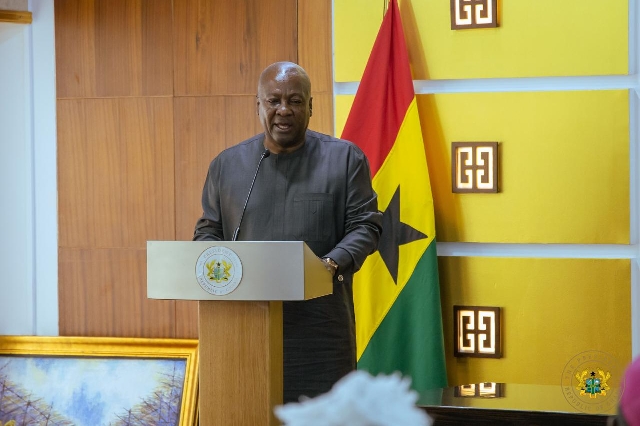 JD Mahama, Ghanaian president
President John Dramani Mahama has reiterated his administration’s commitment to restoring public confidence in Ghana’s democratic and accountability systems, describing strong institutions as the backbone of effective governance.
Speaking on the state of governance and anti-corruption efforts, President Mahama said his government was prioritising reforms aimed at reinforcing the capacities of key oversight bodies, particularly the Economic and Organised Crime Office (EOCO) and the Office of the Special Prosecutor (OSP). He noted that these institutions must be empowered to operate independently, efficiently and without political interference.
His comments come at a time when parts of the public, civil society, and some political voices have renewed calls for the OSP to be scrapped, citing persistent delays in high-profile prosecutions, administrative challenges, and questions over the office’s overall impact since its establishment. Critics argue that the OSP has not lived up to its mandate of deterring corruption, while others say the office has lacked adequate resources and clarity of direction.
President Mahama, however, defended the continued existence of the OSP, describing it as a crucial element in the nation’s anti-corruption architecture. He said dismantling the institution would weaken efforts to hold public officials accountable and undermine the broader push to strengthen checks and balances.
He urged Ghanaians to remain patient as the OSP moves to accelerate ongoing investigations and streamline its operations. According to the president, the long-term solution lied not in abolishing institutions but in addressing the structural and logistical challenges that hinder their performance.
President Mahama emphasised that restoring trust in governance required consistent support for accountability bodies, improved transparency, and reform-driven leadership. Strengthening and not abolishing these institutions, he said, was essential to building a credible system capable of confronting corruption in all its forms.
Source: classfmonline.com/Pearl Ollennu


Trending News
Vice President chairs Inter-Ministerial Committee meeting on decentralisation
03:57
Classfmonline.com apologises to MIFF CEO
07:43
Honorary degree misuse: GTEC bans unaccredited bodies, warn universities
10:59
Dzodze-Penyi SHS Headmaster asked to step aside over alleged sexual misconduct
07:18
Minority warns of crisis in fishing communities, calls for urgent government action
11:01
W/R: Salman community accuses Adamus mining of neglect, threatens protest over unfulfilled promises
10:45
Ministers’ Wives Association of Assemblies of God pays courtesy call on First Lady
03:50
Graduate nurses and midwives gear up for protest over 5-year unemployment stall
07:31
Sam George supports 127 constituents with business tools and funding
09:53
Ofankor–Nsawam: Roads Ministry announces new traffic diversion for asphalt works
06:54