
GES describes school malaria campaign as investment in children's future, urges consistent net use
Education
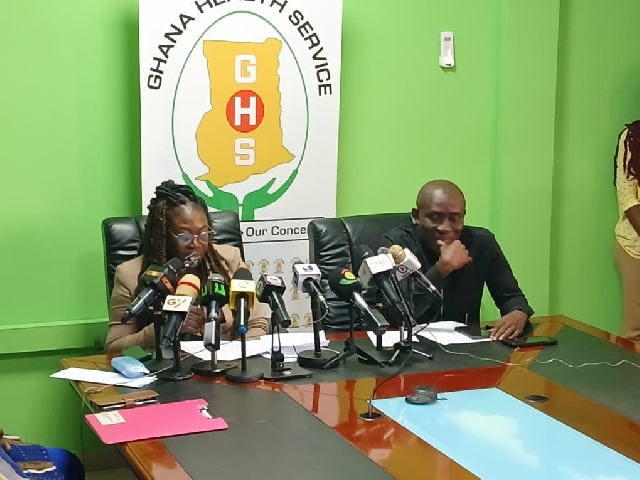 Theresa Oppong Mensah, National Coordinator of the School Health Education Programme (SHEP)
The Ghana Education Service (GES) has described the nationwide school-based distribution of insecticide-treated nets (ITNs) and malaria vaccines as a strategic investment in Ghana's children, urging families to ensure every net is used consistently.
Speaking at a joint Ghana Health Service (GHS) and GES briefing on malaria interventions, the National Coordinator of the School Health Education Programme (SHEP), Theresa Oppong Mensah, said good health and quality education go hand in hand.
"At the Ghana Education Service, we firmly believe that education and health are inseparable. A child battling with malaria cannot learn effectively," she said.
Mrs Oppong Mensah said repeated malaria infections contribute to school absenteeism, poor concentration, lower academic performance and increased financial pressure on families.
She said schools provide an effective platform not only for distributing insecticide-treated nets but also for promoting healthy practices among pupils, their families and surrounding communities.
According to her, the success of the campaign should be measured not by the number of nets distributed but by how many children sleep under them every night.
"The true measure of our success will not be the number of nets given out, but the number of children who sleep under the net every single night," she said.
Mrs Oppong Mensah said teachers have a key role in educating pupils about the importance of malaria vaccination and the proper installation and use of insecticide-treated nets, while reinforcing the need for consistent use.
She also appealed to parents and caregivers to air the nets under shade for at least 48 hours before hanging them over their children's sleeping spaces and ensuring they are used every night.
She cautioned against using the nets for purposes other than malaria prevention.
"These ITNs are intended solely to protect people from malaria. They are not for fencing gardens, not for protecting crops, not for fishing, not for drying food items. Every net that is diverted from its intended use leaves a child vulnerable to malaria," she said.
GES also called on regional, metropolitan, municipal and district education directors, health teachers, School Management Committees (SMCs), Parent-Teacher Associations (PTAs), traditional and religious leaders, community leaders and the media to support public education on proper net use, care and malaria vaccination.
"As we continue these national interventions, let us remember that every net represents hope. Every vaccine also represents hope," Mrs Oppong Mensah said.


Trending News

Mid-Year Budget Review: Okro, fish, garden eggs prices and others ‘reduced’ due to govt’s single-digit inflation – Ato Forson says
16:56
University of Ghana School of Law wins Supreme Court 150th anniversary ‘Moot Court’ competition
17:36
Government announces plan to build 50,000 houses for teachers
13:31
C/R: Forestry Commission condemns eviction of staff over 24-hour Economy market project, calls for justice
10:24
Parliament approves Bill to establish National Defence University
02:16
You are one of my hardest working ministers - Mahama praises Ablakwa
00:00
Mid-Year Budget Review: Why are you not wearing white today? - NPP 1st Deputy Whip queries Majority
16:35
Young man arrested for allegedly selling employer's tricycle and ‘faking’ armed robbery - Crime Check GH
16:54
Konongo Traditional Council performs traditional rites to drive away illegal miners
13:30
Kwahu South MCE urges Roads Minister to resume stalled Kwahu Business Forum road project
13:39