

Iraq: At least 23 dead amid fighting after Moqtada al-Sadr quits
World News
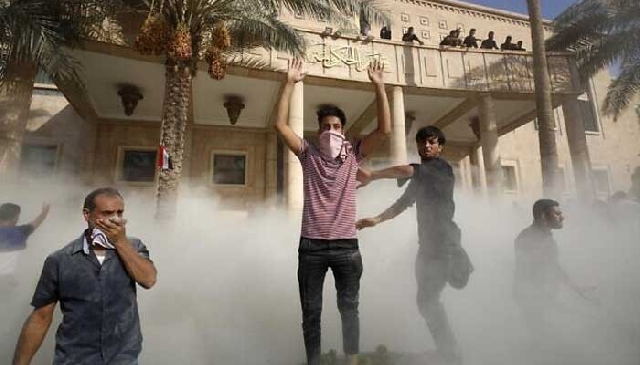 At least 23 people have been killed in some of the worst fighting for years in Iraq's capital
At least 23 people have been killed in some of the worst fighting for years in Iraq's capital, Baghdad, sparked by a key leader's decision to quit politics.
Gunshots and rocket-fire rang out as supporters of Shia Muslim cleric Moqtada al-Sadr clashed with security forces and militias aligned with Iran.
Violence erupted after Mr Sadr, one of Iraq's most influential figures, said he was withdrawing from political life.
Iraq has been in a state of paralysis since October's inconclusive elections.
Mr Sadr's bloc won the most seats but could not agree on the formation of a new government with the second largest bloc, comprised mainly of Iran-backed parties.
The fighting has been taking place between Mr Sadr's militia, known as the Peace Brigades, militias supported by Iran, and members of the Iraqi security forces.
Much of it has been concentrated around the city's Green Zone, a heavily fortified area that houses government buildings and foreign embassies. Dutch embassy staff were forced to move to the German mission due to the clashes.
Iran has closed its borders with Iraq in response to the unrest, and Kuwait has urged its citizens to leave the country immediately.
All of those killed were Mr Sadr's supporters, while some 380 were injured, Iraqi medics said, according to AFP news agency.
A spokesperson for UN Secretary General Antonio Guterres said he was alarmed by events and called for "immediate steps to de-escalate the situation".
And Mustafa al-Kadhimi, Iraq's caretaker prime minister - and Sadr ally - declared a nationwide curfew after the unrest spread to several other cities.
He has suspended cabinet meetings and pleaded with Mr Sadr to intervene and stop the fighting.
For now, Mr Sadr has announced a hunger strike until the violence and use of weapons by all sides stops.
The 48 year old has been a dominant figure in Iraqi public and political life for the past two decades.
His Mehdi Army emerged as one of the most powerful militias which fought US and the new Iraqi army in the aftermath of the 2003 invasion which toppled former ruler Saddam Hussein.
He later rebranded it as the Peace Brigades, and it remains one of the biggest militias in the paramilitary Popular Mobilisation Forces.
Mr Sadr, one of Iraq's most recognisable figures with his black turban, dark eyes and heavy set build, has championed ordinary Iraqis hit by high unemployment, continual power cuts and corruption.
He commands millions of followers, hundreds of whom have been camped outside parliament since storming it twice in July and August in protest at the political deadlock.
Once an Iranian ally, Mr Sadr has repositioned himself as a nationalist wanting to end US and Iranian influence over Iraq's internal affairs.
Source: BBC


Trending News
Office of the First Lady urges proper adoption procedures after Mamprobi baby theft scare
17:49
NHIS campus connect train stops at UHAS to boost student enrollment
08:07
Minerals Commission Summit: Isaac Andrews Tandoh unveils major reforms to boost local ownership and crack down on fronting
15:08
US Embassy in Accra opens over 1,000 B1/B2 visa appointments
20:43
Garrison Methodist Presbyterian Church launches 70th anniversary celebrations
09:47
Russian content creator: Embassy of Russia in Ghana reacts as Sam George seeks talks on justice, possible extradition
16:17
OSP confirms, explains INTERPOL Red Notice deletion for Ken Ofori-Atta following lawyers’ announcement
02:40
NPP renew ties with Media General after constructive talks
10:46
Mamprobi Polyclinic: Police service to arraign woman in court over alleged newborn theft
17:42
Security Bill risks politicisation and weak financial accountability – Minority
07:57