
Carbon finance must build Ghana, not enrich consultants — Annoh-Dompreh
News
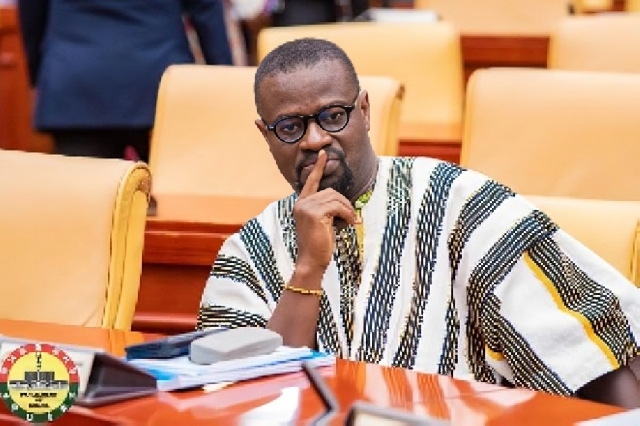 The Minority Chief Whip, Frank Annoh-Dompreh
The Minority Chief Whip, Frank Annoh-Dompreh, has called for Ghana’s carbon market framework to be built around national development, arguing that carbon finance should create tangible benefits for citizens rather than primarily enriching foreign consultants.
Contributing to discussions on carbon market capacity and the proposed national carbon registry, Mr. Annoh-Dompreh stressed that carbon finance must translate into jobs, improved food security, support for the energy transition and broader local economic growth.
He maintained that carbon projects should be judged by their impact on people’s lives, likening them to public infrastructure investments.
“If carbon initiatives do not help address everyday development challenges in our communities, then they risk becoming an abstract exercise rather than a meaningful tool for national progress,” he argued.
The Minority Chief Whip also underscored the need for Ghana to reduce its dependence on external technical expertise by developing a strong pool of local professionals to manage every aspect of the carbon market value chain.
He proposed the establishment of a National Carbon Finance Academy through collaboration among the Environmental Protection Agency (EPA), universities and the private sector to train Ghanaian experts in project design, carbon accounting and measurement, reporting and verification (MRV), legal contracting, Article 6 authorisations, registry management, carbon finance and benefit-sharing mechanisms.
According to him, building local expertise would ensure that a greater share of carbon finance remains within the Ghanaian economy.
Mr Annoh-Dompreh further described the proposed Ghana Carbon Registry as the backbone of the country’s carbon market, saying it must be digital, transparent, secure and capable of providing real-time tracking of carbon credits.
He explained that the registry should accurately record the issuance, transfer, cancellation, retirement and authorisation of carbon credits while integrating with Ghana’s greenhouse gas inventory and Nationally Determined Contributions (NDC) accounting framework to prevent double-counting and strengthen market integrity.
Without a credible registry, he cautioned, Ghana would expose itself to fraud and undermine confidence in its carbon market.
The Minority Chief Whip also advocated a decentralised approach to capacity building, urging government to extend training beyond institutions in Accra to district assemblies, financial institutions, civil society organisations and local communities.
He said communities expected to host carbon projects must understand how the market operates and how they stand to benefit, warning that excluding them would amount to replacing one form of resource extraction with another.
Drawing an analogy to land ownership, Mr Annoh-Dompreh asked whether anyone would sell a farm without fully understanding the contract, saying the same principle should apply to carbon transactions.
He concluded that strong local capacity, a transparent national carbon registry and equitable community benefits are essential if Ghana is to unlock genuine value from carbon markets rather than merely trading paper credits.


Trending News
Carbon finance must build Ghana, not enrich consultants — Annoh-Dompreh
15:51
GES describes school malaria campaign as investment in children's future, urges consistent net use
17:16
June 29 downpour among highest daily rainfall recorded since 1995 – Interior Minister
14:58
Ghana Armed Forces deploy troops to flood-hit communities in Accra under ‘Operation Boafo’
11:25
National House of Chiefs urges permanent solution to recurring flooding
14:46
GES stops salary of Bole SHS teacher wanted over alleged misconduct with student
14:04
Bawumia calls for state of emergency over flood crisis
16:44
GRIDCo, ECG temporarily shut down Mallam and Achimota substations over flood risk
11:03
Government to mainstream agroecological practices under Feed Ghana programme
14:43
Prayer must be matched with hard work to build Ghana – Prez. Mahama
13:05
